Research Programs
Three interconnected research areas. Each study record shows its evidence status.
Tropical Agroforestry & Regenerative Ecology
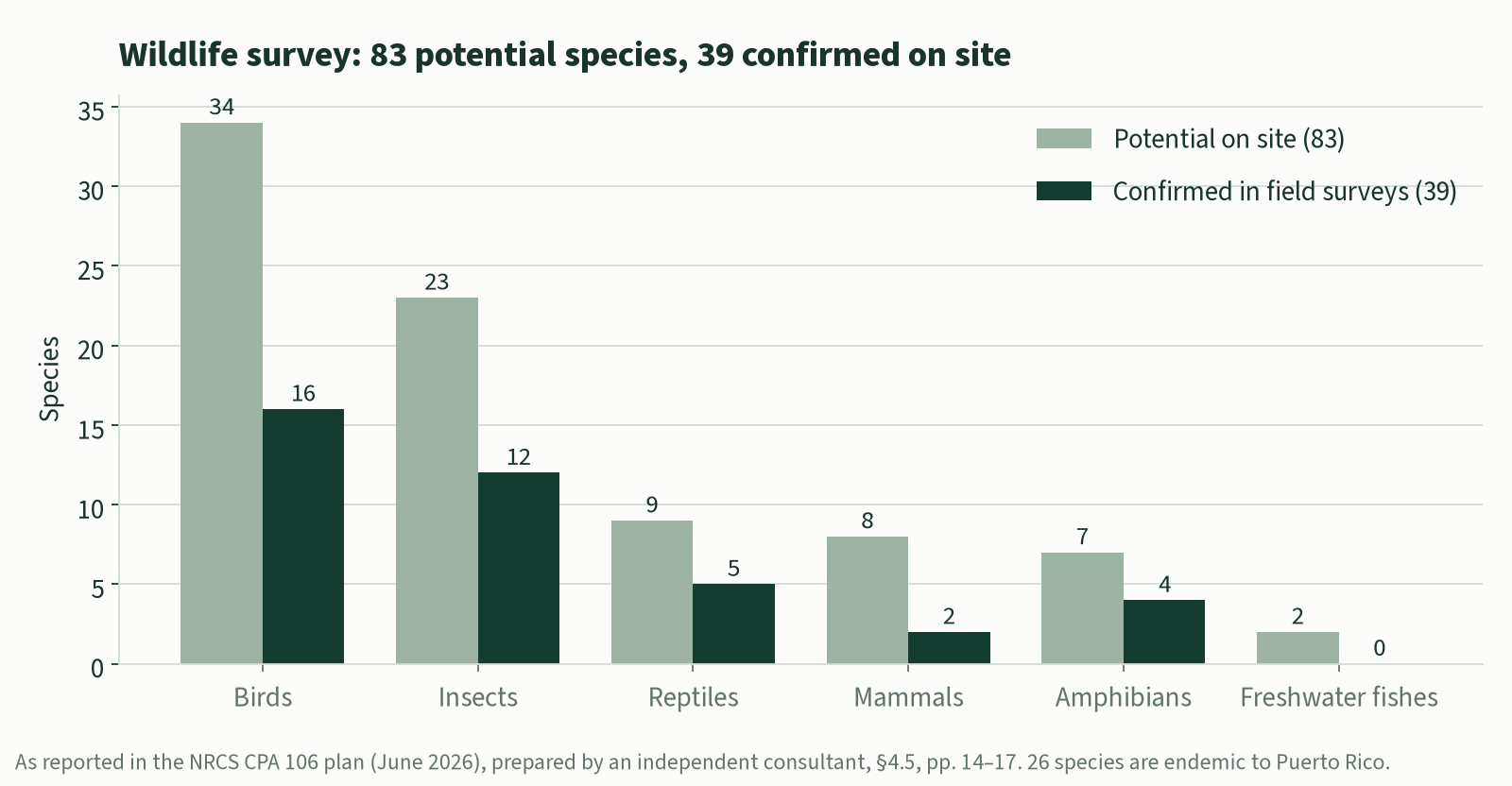
Tropical agroforestry integrates agricultural production with trees, soils, microorganisms, and wildlife. Copper Hill investigates how these interactions influence agricultural productivity, biodiversity, soil function, and environmental resilience.
Research areas
- Agroforestry systems
- Soil science & nutrient cycling
- Biodiversity & pollinator ecology
- Conservation practices
- Agricultural resilience
Related foundational studies
Botanical Science & Bioprocessing
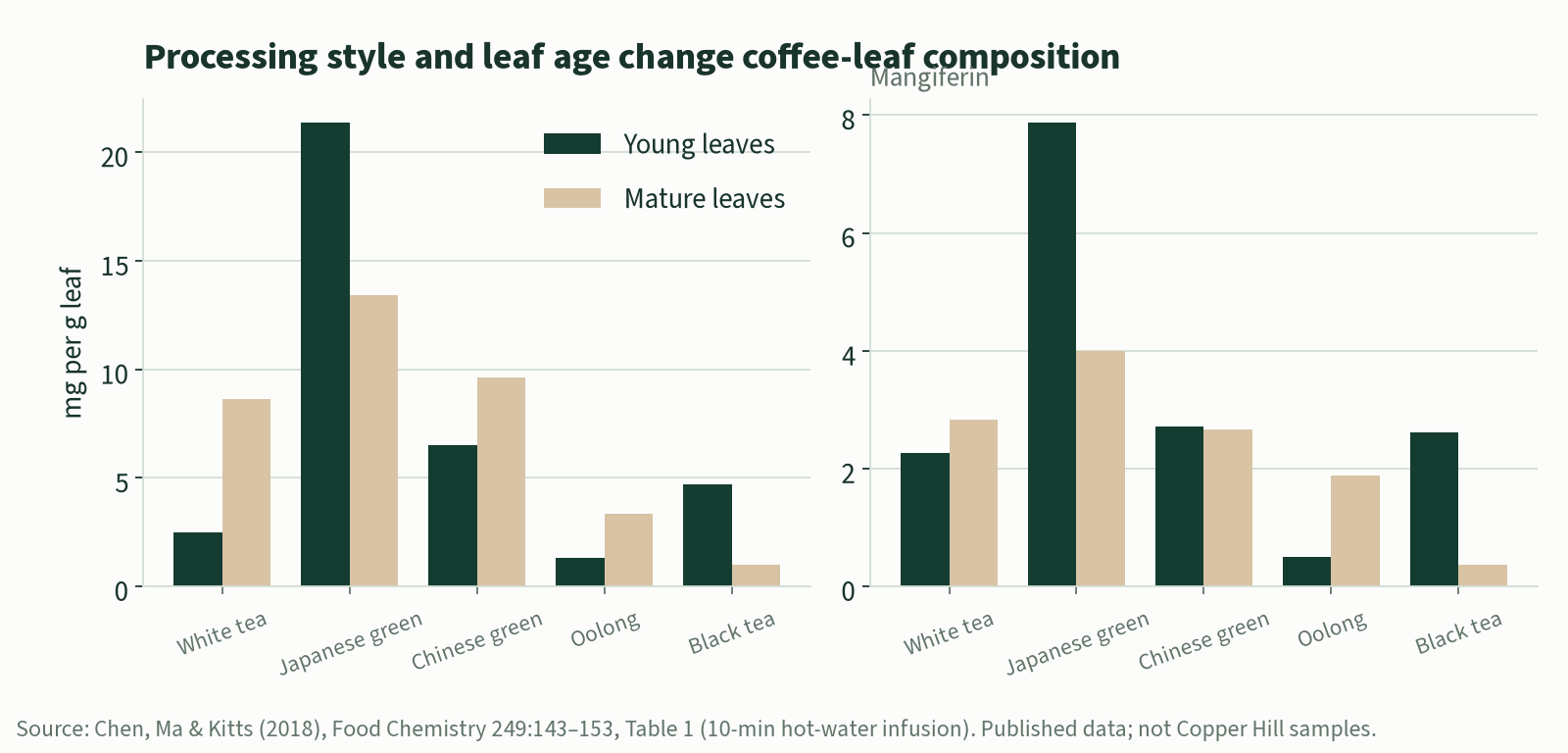
Copper Hill investigates botanical resources through chemical and sensory characterization, experimental processing, and the evaluation of technical applications. Areas of interest include fermentation, oxidation, preservation, food safety, and reproducibility.
Research areas
- Botanical composition
- Experimental bioprocessing
- Food science & ingredient characterization
- Safety and stability
- Technical reproducibility
Related foundational studies
Agricultural Economics & Circular Systems
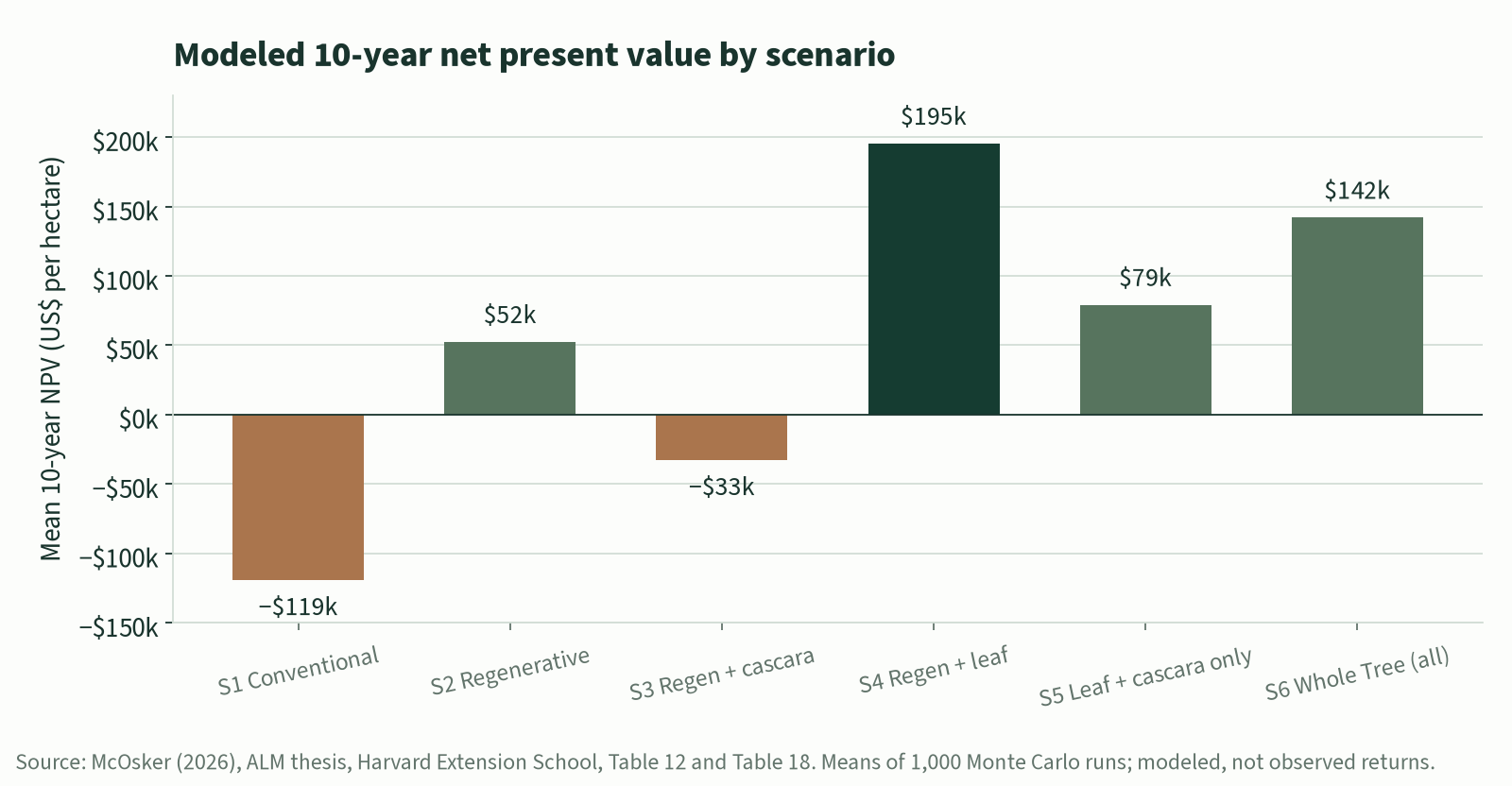
The program examines whether additional biological resources can generate incremental net economic value and create financial capacity for regenerative investment. Research evaluates costs, processing requirements, market conditions, uncertainty, and potential ecological outcomes.
Research areas
- Agricultural enterprise economics
- Resource utilization
- Scenario and risk analysis
- Whole Tree Economic Model
- Ecological and economic outcomes
Related foundational studies
Where the research happens
Copper Hill Farm, in Las Marías & Maricao, Puerto Rico, is the Station’s principal research site. The research program is directed from Puerto Rico, where its principal research is carried out and where the intellectual property it produces is owned. Some projects include work with independent collaborators at other sites.
- Principal research site
- Copper Hill Farm, Las Marías & Maricao, Puerto Rico. Research direction, field programs, research-batch coffee-leaf processing, site baseline work, and the Whole Tree Economic Model case study.
- Collaborating field site
- Nicaragua. Observation of field-scale coffee-leaf harvesting and processing at an independent farm.
- Collaborating brewing trials
- Portland, Maine. Immersion and drip extraction trials.
Programs and collaborators
- USDA Natural Resources Conservation Service (NRCS)
- Conservation planning for the farm’s forest and agroforestry areas, with field-office reviews from 2022 and a forest management plan completed in 2026 (Studies 05 and 11).
- AgroforestryX
- Copper Hill is working with AgroforestryX (NRCS) and is among the first to implement it. Used to design the forest-farming and agroforestry plots since 2025 (Study 05).
- Independent environmental consultant
- Forest management planning, vegetation and fauna inventories, and agroforestry design since 2022 (Studies 08 and 11).
- USDA Climate-Smart Commodities project
- Participant in a USDA Partnerships for Climate-Smart Commodities project in Puerto Rico, 2023–2028: shade-tree planting and biochar in the coffee plots (Study 01).
- Independent forestry consultant
- Forest Stewardship Plan for Copper Hill Farm, July 2022 to June 2032, prepared by an independent forestry consultant, including bird counts (Studies 06 and 08).
Related research and past programs
- Related published research
- University of British Columbia, Faculty of Land and Food Systems. Study 04 draws on published coffee-leaf research by associated researchers; see Publications.
- USDA NRCS conservation contract
- Terraces, cover cropping and erosion controls, 2019–2024 (Study 05).
Each study record lists its principal site and any collaborating site. Collaborators are independent of the Station. Their published work keeps its original authors and institutions, and listing them here does not mean they endorse the Station.
Find the work behind each program
The station distinguishes experimental investigations, field demonstrations, ecological baselines, and economic modeling. Each project record describes its methods, participating organizations, and available findings.
Explore all studiesStart here
- Site baseline · Learn how soil, water, and habitat observations establish a reference for later measurements.
- Coffee-leaf processing · See how preparation and drying become research variables.
- Whole Tree Economic Model · See how the thesis compares farm scenarios.